Egyptian mediation between Tehran and Washington: Cairo’s plan to ease regional tension
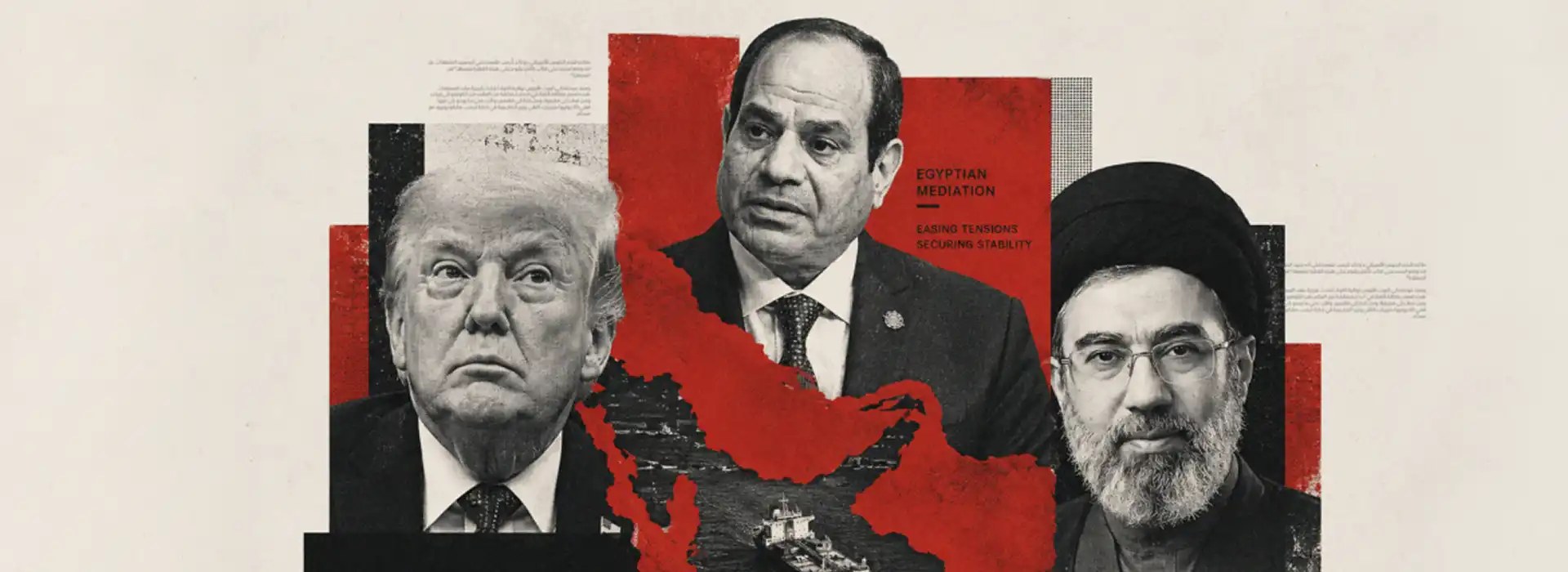
Egyptian diplomatic sources said Cairo has intensified mediation between the United States and Iran, alongside regional and international contacts aimed at stopping the conflict from widening, as capitals wait for talks between Tehran and Oman on a ceasefire proposal that could reopen negotiations.
According to informed sources, Egypt does not see mediation as a short-term containment effort, but as a chance to open a wider political and security track. It would start by de-escalating in the Gulf and then move toward rewriting regional security arrangements that protect navigation in the Strait of Hormuz and ease tension between Iran and Gulf states.
"Protecting regional navigation and reducing military escalation in the Red Sea and the Gulf is essential to prevent a collapse of international trade and energy markets."
The sources said Cairo is coordinating with several states, including Qatar, Turkey, and Oman, with Oman and Saudi Arabia involved in some tracks, from a shared view that continued confrontation would carry a heavy economic and security cost amid energy-market turbulence and disrupted shipping.

Cairo enters the mediation track
Egyptian diplomatic sources said Cairo has, in recent weeks, joined a regional mediation path that includes Egypt, Turkey, Oman, and Qatar, with Oman and Saudi Arabia present at some stages, to contain the escalation between the United States and Iran and prevent a wider confrontation.
The sources said Egypt is seeking an active role because it is among the states most harmed by the continuation of the war, based on several strategic pillars:
- Securing strategic sea lanes in the Red Sea and the Suez Canal.
- Avoiding a deeper inflation crisis and further disruption of global fuel and energy prices.
- Protecting the security and stability of neighboring Gulf states as part of a shared national security.
Could the understandings reopen talks?
Diplomatic sources said Cairo is closely following consultations between Oman and Iran on the Strait of Hormuz, convinced that an understanding on navigation there could become the main door to reviving negotiations and opening wider Gulf security arrangements.
The sources concluded that a possible Hormuz understanding would not end the crisis. It would begin a new negotiating path that may extend to more complex files, above all Iran’s nuclear program and the future of regional security.